Industries that mainly deal with hazardous risks pose safety concerns at every stage of the process. Their business-specific operations effectively influence the workforce morale, compliance, and corporate reputation. Following traditional safety programs has become outdated heavily as they were solely dependent on historical data records and post-incident reports.
With the release of the latest report by the U.S. Bureau of Labour Statistics, it is found that 5283 workplace fatalities were recorded in the United States, with the rate at 3.5 fatalities per 100,000 full-time equivalent workers.
Predictive analytics is redefining safety management, effectively transforming ideation to practicality. It transforms the way we mitigate serious injuries and fatalities.
What is the challenge involved in reactive safety: Near misses? Is it essential for workplace safety?
Most reactive safety systems do not work successfully. Near misses should not be missed, and root cause investigations come late, which makes the complete process delayed. Impact after a catastrophic event is expensive and also risks potential lives.
With the advancement of technology, modern businesses and enterprises are taking significant steps to embrace data-driven safety measures and AI-enabled predictive insights.
Predictive Analytics: Entering the real game
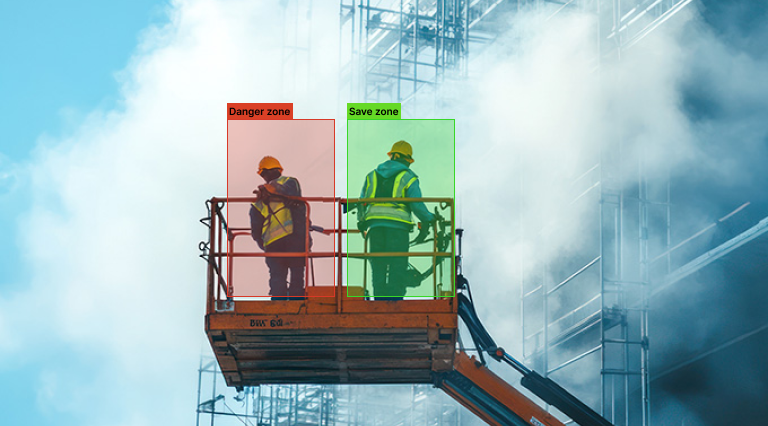
Predictive analytics leverages machine learning models and data science to recognise risk patterns and forecast events before their occurrence. For instance, while doing routine work across a construction facility, an AI-equipped camera is capable of detecting a worker walking directly beneath a suspended load. With advanced video surveillance for construction sites and predictive analytics, it immediately identifies potential conflicts in crane operation timing and pedestrian movements.
How Predictive Analytics helps in preventing SIFs

Detecting SIF potential events
Workplaces that operate with multiple machineries are the places where certain minor events can escalate into serious consequences. The predictive tools assist organisations to classify as well as act accordingly depending on the potential severity.
Unveiling hidden risk factors
The predictive models in machine learning are trained in a way that can analyse years of data to focus on hidden precursors to SIFs. This data can suggest deeper systematic flow in tools and procedures that could potentially result in fatal shocks when not addressed.
Targeted intervention
The process of focusing on places where risks are the highest contributes to the overall success in workplace safety. Targeting the specific safety compliance can enhance safety compliance in a single facility.
Improving Safety Culture
Integrating dashboards, decision support tools and timely alerts helps to empower frontline workers and supervisors to work with advanced intelligence. The combination of advanced intelligence with a proper safety culture is what determines the comprehensive safety of workplaces.
How does the PSIF help in driving innovation in safety design?
Potential serious injury can be defined as an unplanned event that is capable of creating potential harm or injury. Predictive insights have major applications across different workplaces like manufacturing, mining facilities, and many more. Across high-risk crane operations, the predictive model can be used to analyse task schedules, live video, and data for detecting unsafe conditions. These conditions mainly involve an automatic intervention such as rerouting pedestrian paths or restricting zone access.
What are the benefits of pSIF towards a safer workplace culture?
A lot of the benefits of pSIF create an AI-driven mindset, altering the culture of good.
We have curated a list of advantages below.
Risk prioritization
The conventional form of near-miss incidents covers a list of minor and major accidents with equal weight. However, PSIF-based insights bring clarity and help to filter noise by focusing on high-potential events. It allows safety teams to place their resources as well as time wherever it matters.
Redesigning operations
Using AI-based insights and manufacturing security monitoring software, any accidents within a workplace can be monitored in real time. The occurrence of events in workplaces not only brings a halt to operations but also results in project delays. With the integration of predictive insights, workplaces can reduce their overall fatalities and injurious accidents significantly.
Behavioral change
Any kind of unsafe behaviour inside a facility can potentially damage the work culture. As per the latest research, it has been found that on integrations of AI video analytics for manufacturing, organisations have noticed that violations reduced by 65% and it improved work efficiency.
Personalised safety training
With the application of personalised training programs, workers can be potentially trained in situational awareness. The targeted learning approach helps to reduce accidents and increase retention, lowering future risk.
What is the real-world impact of AI-based Predictive insights?
Enterprises that embraced predictive safety analytics have reported substantial reductions in serious incidents. A global manufacturing company utilised predictive modelling to diminish its overall SIF rate by over 30% within a short period. Another global energy enterprise discovered that high turnover among several employees correlated with increased SIF potential, resulting in changes.
How is PSIF considered the future of safety intelligence?
Considering the industrial work environment becoming more intricate, the shift towards predictive safety frameworks is not only important but also influential. PSIF-based models enable organisations to move from reaction to prevention. Pattern identification before incidents occur enables authorities and teams to fine-tune workflows and allocate resources effectively.
With Artificial Intelligence continuing to evolve, predictive analytics are becoming increasingly powerful. Several integrations with computer vision, sensors, IoT, as well as real-time monitoring enable dynamic risk assessments and immediate alerts. It helps in creating real-time solutions for different applications.
Final conclusion
The latest shift from reaction to prevention can create a major milestone in occupational safety. The predictive analytics helps in equipping organisations with the foresight required to protect workers. By leveraging the power of predictive analytics, enterprises and authorities can move beyond just responding to events and also eradicate the conditions resulting in serious injuries.
It addresses a commitment to smarter decision-making and helps in investing in predictive safety tools. The future of workplace safety is not about avoiding incidents, but also eliminating the requirement of AI-driven PSIF frameworks.
Frequently asked questions
What are the benefits of using AI video analytics software for workplace safety?
AI video analytics software helps in workplace safety by administering real-time monitoring, proactive risk assessment, and automatic hazard detection. From ensuring PPE compliance to speeding up emergency response, diminishing human error and delivering data-driven insights to prevent future incidents, AI video analytics have many benefits across different applications.
Can manufacturing security monitoring software predict potential injuries?
Yes, at Nextbrain, we have designed manufacturing security monitoring software with AI and video analytics that predict potential injuries. It recognises unsafe behaviours and identifies environmental risks in real time.
How is AI video surveillance used for construction site safety?
Our AI video surveillance helps in improving construction site and safety with real-time applications. It can detect PPE violations, monitor workers’ behaviour, and identify hazardous conditions. It can prevent accidents and ensure compliance with safety protocols.
What features should I look for in AI video analytics software for industrial safety?
If you are looking to select AI video analytics software for industrial safety, then we have curated a list of top essential features. It mainly involves restricted area alerts, real-time hazard detection, PPE compliance monitoring, behavioural analysis, integration capabilities, scalability, customizable alerts & reports and many more.
How can AI-driven video analytics reduce workplace fatalities in high-risk industries?
Workplace safety is of primordial importance when it comes to high-risk industries. From reducing fatalities in workplaces to creating a smart manufacturing work infrastructure, advanced intelligence leverages valuable data to generate actionable insights.
How does predictive analytics assist in reducing SIFs?
Predictive analytics utilises historical data, pattern recognition and machine learning algorithms for understanding the root causes and where serious incidents may occur. It enables enterprises and organisations to take into consideration the various high-risk conditions. With early detection, various incidents can be prevented prior to their escalation.
What are the industries that can make the most of SIF predictive insights?
The industries mainly involve workplaces that involve high-risk industries such as mining, oil & gas, manufacturing, logistics, and energy. This place often comprises complex operations and exposure to hazardous conditions.
How does this approach help in advancing safety culture?
Predictive insights often have the potential to shift right from blame-focused investigations to forward-looking prevention. It empowers safety systems across organisations, helping to nurture a culture of constant improvement.



Saran
November 12, 2025 Author