Artificial Intelligence and its future look forward to transformative changes in transportation. The major core technologies like machine learning and computer vision are effectively driving advancements. In recent years, the global tech industry has been going through advancements in AI that are bringing strong integration of computer vision into the real world. It can be stated that in the next few years, self-driving cars will become commonplace in 10 years.
Several trends involve improved safety features, smart city integration, and improved AI algorithms. As we explore the primordial stages of technology, it is clear that AI is set to reshape transportation, making it easier and safer. In this blog post, we are going to delve deeper into the diverse aspects of Artificial Intelligence in autonomous vehicles.
What is the current phase of autonomous vehicles?
Autonomous vehicles have been on the road for a long time, however, they are still in the testing phase. Top auto vehicle companies such as Waymo, Tesla and Cruise have made significant achievements in developing self-driving technology. These vehicles mainly rely on AI algorithms and machine learning models for data interpretation from cameras and sensors to navigate roads and make decisions in real time. The primary challenge for AI-based self-driving cars is the acquisition of training datasets. The combination of quality datasets and data labelling is of immense importance. Nowadays, computer vision in autonomous vehicles is driving around the world and our Computer Vision development company, Nextbrain, is making the most of AI models to help businesses with AI innovations.
Data labelling
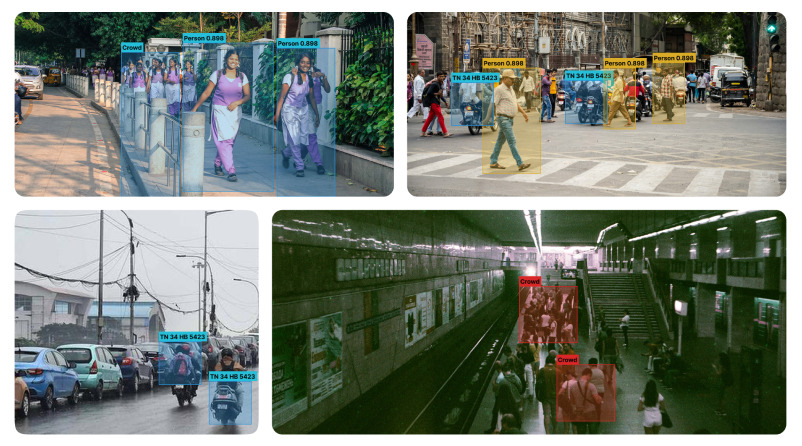
For datasets of self-driving cars, data labelling is significantly based on human efforts to identify unlabeled elements in raw images and assign them a class. The process of maintaining high levels of precision for enterprise-grade projects can be difficult. However, with AI it has become easier. It helps to tag data with valuable information that machine learning models can easily understand. Labeled data assist machine learning models learn from data impacting the overall performance of machine learning models.
Advanced technologies driving AI in autonomous vehicles
Computer vision
Computer vision allows a vehicle to comprehend and understand its surroundings. It makes the effective use of sensors, cameras and sophisticated algorithms for interpreting visual information. Cameras that are mounted on the vehicle gather a continuous stream of images that can be analyzed to identify traffic signs, pedestrians, obstacles and road markets. Advanced deep learning models and convolutional neural networks (CNNs) are used to make sense of visual data. AI models can be trained on vast datasets for recognizing and distinguishing elements within a driving environment. These interpreted data can be used to generate actionable insights and make real-time decisions. At Nextbrain, we provide excellent Computer Vision Development Services to different industries across the globe leveraging best-in-class vision AI algorithms and tools.
Machine learning & deep learning
The advanced techniques play a crucial role in autonomous vehicle systems. They allow vehicles to learn from diverse amounts of data improving their capability to make complex decisions. With active detection capabilities, machine learning harnesses algorithms to interpret sensory data from radar, LiDAR and cameras.
Object detection: ML algorithms help to classify objects such as pedestrians, vehicles and other objects.
Behaviour prediction: It is empowered with the ability to understand and anticipate the actions of pedestrians and other road users.
Decision making: Leverages reinforcement learning algorithms to acknowledge optimal driving strategies.
Lane detection: Determines the turning paths on the road and prevents obstacles alerting to turn to the right lane.
Image processing: Image processing in autonomous vehicles leverages cameras for interpreting visual surroundings enabling the vehicle to identify objects and navigate effectively.
Natural language processing
For voice recognition and voice-activated access control, NLP improves the interaction between autonomous vehicles and humans. It helps autonomous vehicles to comprehend and respond to verbal commands advancing user experience.
Vision AI in road safety
As a result of computer vision technology, the data of other vehicles near a self-driving vehicle can be continuously decoded anticipating probable crashes and accidents. It alerts the driver in real time. With lighting conditions differing as per the route and time of the day, it becomes challenging for the autonomous vehicle to shift immediately between different light modes. Computer vision algorithms are capable of recognizing low light conditions by using LiDAR sensors.
Top future trends in vision AI for autonomous vehicles
Seamless integration with smart cities
Autonomous vehicles can increasingly integrate with smart city infrastructure that can facilitate enhanced traffic management and optimized route planning.
Improved safety features
Artificial intelligence brings valuable improvements in vehicle safety. Advanced driver-assistance systems are capable of evolving with improved decision-making and access control.
Easy communication
Leveraging advanced technologies enables autonomous vehicles to communicate with other vehicles for safety purposes and to maintain an expedient road infrastructure.
Advanced AI algorithms
Artificial intelligence algorithms can be more sophisticated and capable of tackling complex driving scenarios and making decisions in distinct conditions.
In this context, it is important to learn through the challenges that can arise while implementing AI and computer vision for autonomous vehicles.
A Look through the challenges
Ethical matters
When it comes to ethical matters, AI decision-making is typical in some situations that need to be addressed. It is significant to make ethical decisions in scenarios comprising potential harm.
Regulatory & legal issues
The deployment of autonomous vehicles is dependent on certain regulatory and legal challenges. Government authorities should set clear regulations for ensuring the secure integration of autonomous vehicles into existing transportation systems.
Public trust
Building transparent communication regarding the safety and reliability of AV is important. It gains public acceptance and builds trust.
Cybersecurity
Autonomous vehicles are significant to cyber-attacks ensuring advanced cybersecurity measures for securing vehicles from threats are necessary.
Key takeaways
Though the journey of autonomous vehicles is still under process, Artificial Intelligence continues to play a significant role in redefining the future of AV. AI in AV holds immense potential. With the rapidly advancing technological tweaks, autonomous vehicles ought to embrace the state-of-the-art datasets that come down to the requirement of an expanding workforce. The primary challenges we tracked while training a computer vision model for self-driving cars were the process of data gathering, object detection, dataset labelling and semantic instance segmentation. As the leading AI Computer Vision Development Company, Nextbrain creates a proactive approach to the implications of computer vision and AI in autonomous vehicles.
Are you on the lookout for embracing Computer Vision and AI for road safety? Get in touch with our professionals to know more.



Saran
March 28, 2025 Author