It is a city that makes the lives of inhabitants safer and more comfortable. Urban planners, enterprises and governments are harnessing AI to optimize construction, utility management and transportation. Right from predictive maintenance to smart city initiatives, Artificial Intelligence is serving as a transformative technology in remodelling the urban living infrastructure. It enables excellent decision-making, improved security and effective resource allocation.
In this blog post, we will focus on AI's major impact on smart cities and its major contributions to management, safety, and sustainability. First, it is important to acknowledge what smart cities are before studying their impact.
What are smart cities?
A smart city leverages technologies to improve the efficiency of city services and the quality of life for its residents. It integrates IoT sensors, AI/ML algorithms, devices and data analytics for managing and monitoring urban systems.
Core aspects of the digital infrastructure of smart cities
Cities, to become smart, require robust foundations for delivering greater urban efficiency. Listed below are some of the top digital aspects that contribute to smart city operations.

Data processing systems
Smart cities are capable of generating huge amounts of data and leveraging this data can deliver actionable insights. The real-time processing needs edge computing infrastructure that can be combined with a cloud-based analytics platform. The hybrid architecture guarantees minimal latency for critical operations. Additionally, it also maintains comprehensive data analysis capabilities for smarter data handling.
Machine learning algorithms
When it comes to smart city operations, advanced technology leverages predictive algorithms to analyze historical patterns in traffic flow, public service usage and energy consumption for optimizing resource utilization. Deep learning networks (Convoluted neural networks) allow automated decision-making for power grid load balancing, traffic signal timing, and emergency response routing.
Cybersecurity architecture
Smart cities come with several types of security challenges that need to be tackled in real time. Several IoT sensors help in prioritizing performance and affordable approaches as there isn't much space in sensors to identify anything apart from core functionality. Integrating advanced threat detection algorithms is capable of monitoring network traffic patterns and zero trust architecture strategies.
Network Infrastructure
Across city infrastructure authorities 5G networks should be enabled for high-speed data transmission. This, in turn, enables real-time communication between smart traffic systems, emergency services and autonomous vehicles.
IoT analytics framework
Trained AI models are capable of processing real-time data from environmental sensors, utility meters and environmental sectors. It analyzes the gathered video/image data and generates actionable insights. The system makes use of specialized data pipelines that can tackle diverse data types and volumes.
Integration platforms
Smart city infrastructure should always look for ways that maintain seamless communication among traffic authorities and intelligence. Having API platforms data exchange becomes easier and it paves the way to new opportunities.
In this context, we should learn how AI technology and AI Development Services are becoming the backbone of smart cities.
AI Technology: Improving Urban Safety & Security
Artificial intelligence is contributing a lot to improving public safety through predictive analytics, automated response times and real-time monitoring. Besides creating a safer city, it boosts emergency responses and reduces crime rates too.

Traffic management & public transportation
AI technology plays a major role in traffic flow optimization. By analyzing road peak times it can predict demand and improve scheduling. With AI integration, the traffic authorities can adjust traffic signals accordingly and rely on AI-powered route planning that helps commuters find the quickest route.
Waste management optimization
Artificial Intelligence waste management systems utilize smart sensors and bins for monitoring waste levels. It guarantees timely collection of waste effectively reducing overflow and environmental impact. AI technologies provide efficient routes for waste collection and dumping points.
Energy efficiency & resource allocation
Integration of smart grids enables dynamic energy distribution as it uses energy usage patterns to recommend energy-saving measures.
Cost-effectiveness
With the automation of manual processes, several mundane tasks are automated eliminating the need for extensive intervention. The advanced technology ensures that different resources are used efficiently reducing wastage and costs. It reduces the overall operational costs for city management through automation and optimization. From predicting potential failures to real-time monitoring of infrastructure, it significantly reduces costly emergency repairs and secures city assets.
Enhancing quality of life
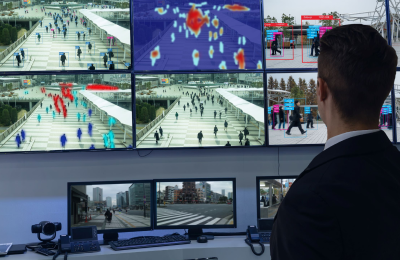
AI-driven technologies are specially designed to improve the overall quality of livability of urban areas. It promotes efficient transportation with real-time traffic monitoring and predictive analytics. AI-equipped surveillance systems are capable of detecting anomalies by improving emergency response times and predicting crime patterns for a better environment. Smart cities with effective application of AI enhance healthcare delivery by allowing remote diagnostics providing real-time health updates during emergencies.
Data-driven decision making
By creating informed urban planning by gathering and analyzing data from cameras, the technology can identify patterns in traffic flow and population movements. AI systems predict problems like power outages and traffic jams to enable authorities to take prompt action.
The Future of Cities With AI: Making A Smart Move
Integrating cutting edge technologies can be intricate and modernizing them is key to smart city infrastructure. Nextbrain, as a reputed AI App Development Company, creates a proactive approach to building advanced AI technologies for smart city infrastructure. From preventing cyber attacks to real-time city surveillance and prompt actions, AI technology is empowered to provide comprehensive benefits.
The interconnection between cities makes them more vulnerable to cyber-attacks. In order to ensure a smooth transition, government agencies should concentrate on smart city infrastructure and building key technologies to support the same.
Final thought
The future of urban infrastructure is brighter when it comes to integrating AI into city infrastructure. It can be considered as a pathway to accomplishing global sustainability goals. By nurturing collaboration between urban planners, governments and technologists, it can be ensured that AI-driven smart cities serve as a model for sustainability in the 21st century. As a renowned AI Development Company, Nextbrain focuses on sophisticated AI tools to aid in smart city development fostering a smart infrastructure. It creates a more equitable environment improving quality of life.
Are you looking to build sustainable urban living? Together we can make it better. Get in touch with our experts to know more about AI technologies for smart cities.


Saran
June 26, 2025 Author